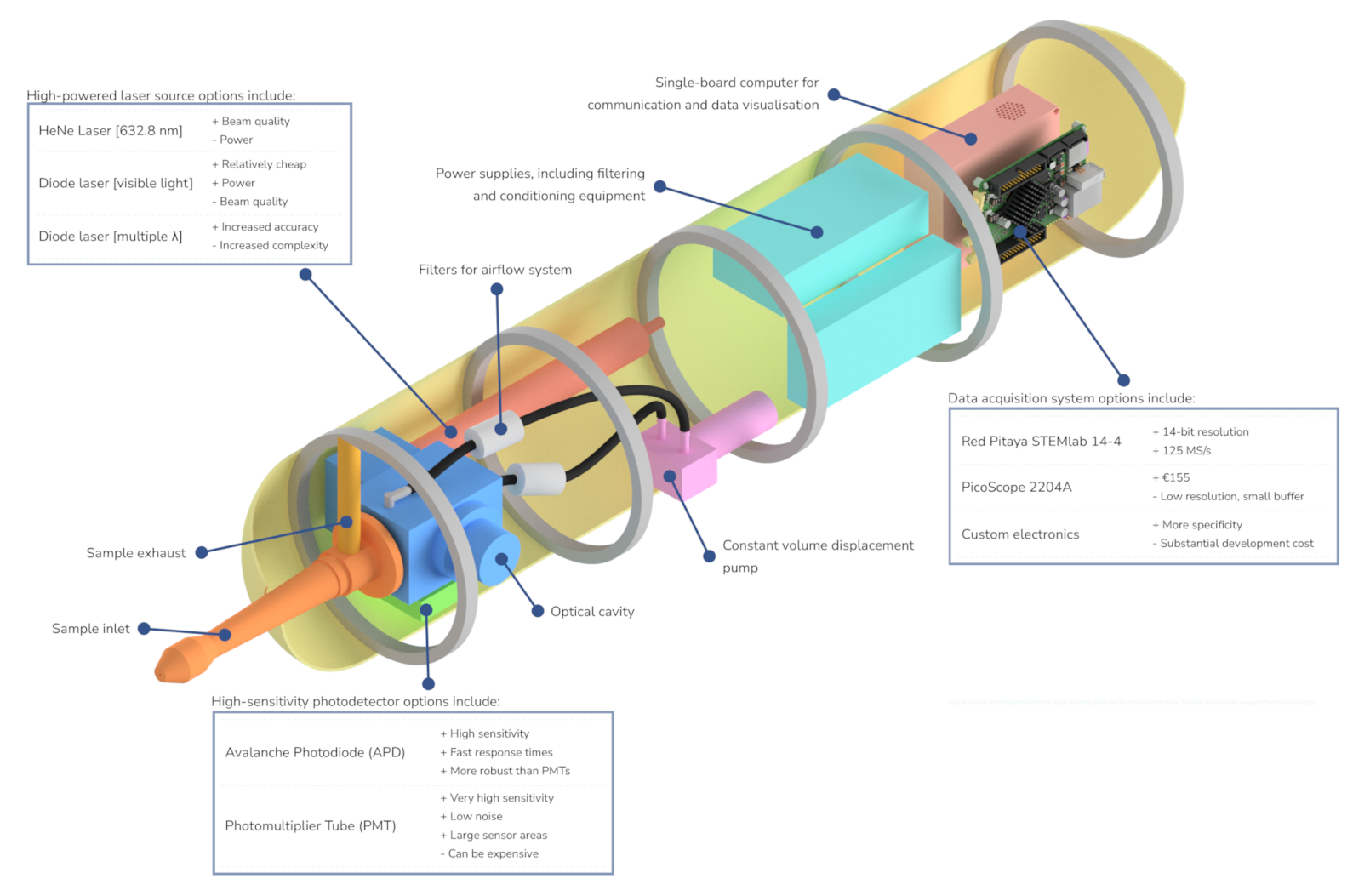
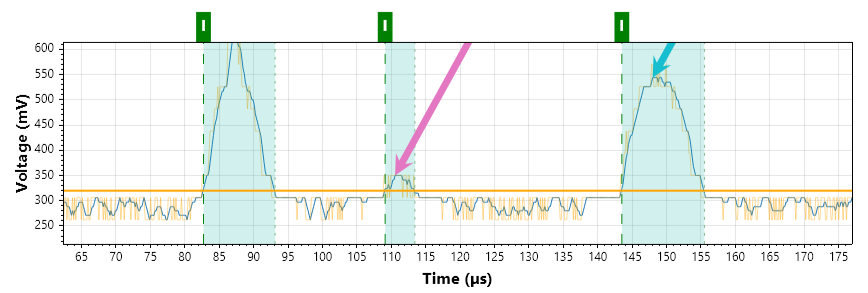
The CRROPC currently uses a HeNe laser and an optical block inherited from the PCASP/ASASP instruments, with new data acquisition electronics. Aerosolising PSLs (particles with a certified size standard) shows measurable peaks, which is used for calibration. Two example histograms generated with the prototype data acquisition software are shown below:
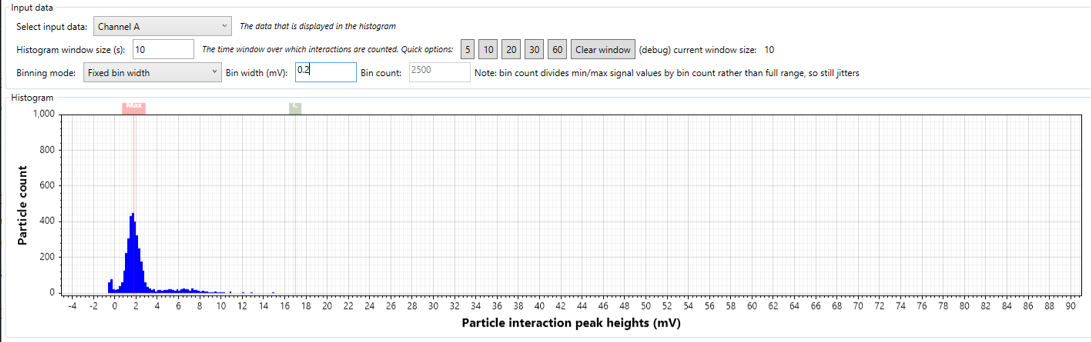
Fig 1: A peak of ~1.8 mV measured for 200 nm PSLs
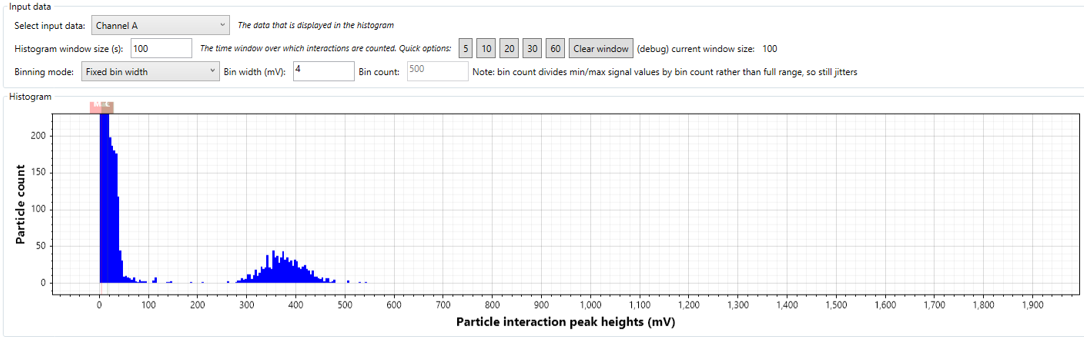
Fig 2: A peak of ~365 mV measured for 1.3 µm PSLs. The high particle count of smaller sizes (~ <50 mV) is likely to be surfactant from the PSL solution
The differences between the two signal values are consistent with modelling of the Mie scattering, and a range of PSL sizes have been tested with an indicative calibration curve being generated as a result. The curve suggests that the instrument can accurately measure sizes between 200 nm and 1300 nm, with those limits largely due to the PSL sizes so far tested. The sensitivity plateaus at some point below 200 nm, with a theoretical limit of ~100 nm but affected by photodetector noise. A detailed post on calibration will follow once further testing has been carried out, including estimations of uncertainties.
When sampling ambient air, outside of the lab environment, the histogram shown below in Figure 3 was generated. Total particle count was approximately 100 particles/ccs⁻¹.
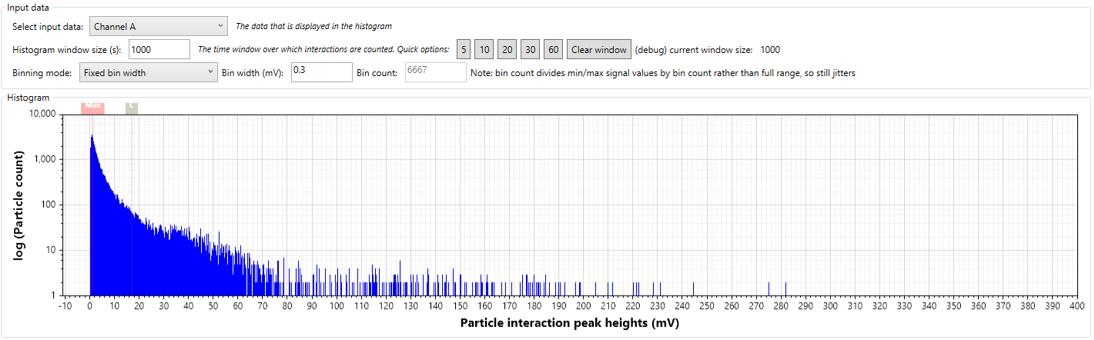
Fig 3: A size distribution of particles in ambient air aggregated over ~16.5 minutes
The next stages of development include:
- Integration of a new laser system (which is on order), which should improve minimum measurable particle size as well as overall instrument reliability
- Further calibration work including testing of extra PSL sizes to establish measurement range more accurately
- Upgrading prototype data acquisition software with calibration data to convert pulse height (mV) to particle size
- Upgrading the airflow system to produce accurate mass flow measurements and thus estimate particle concentrations
Benjamin Rae